
Design Dictionary
Form, color, pattern, face — a reference organizing the four vocabularies of kokeshi design to read the character of each of the 12 lineages.
Styles vary by artisan and period. Illustrations and colors await artisan review.
This description is available in Japanese.
Form (Proportion)
The proportion of head size to body length is the most concise indicator of regional origin and an artisan's hand.
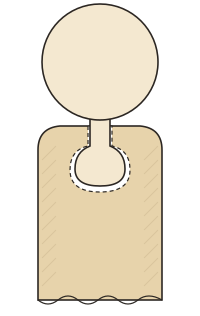
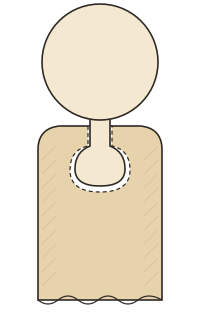
Whether the head is turned separately and inserted into the body ('inset') or carved from a single block ('carved-in-one').
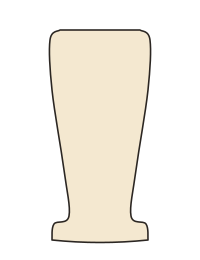
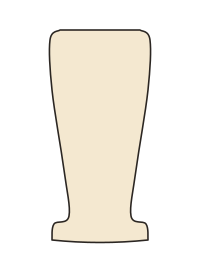
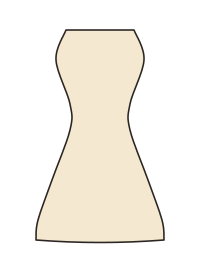
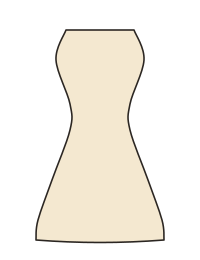
Straight body, waisted body, flared hem — the contour line defines the expression.
Ancestor type:Mizuhiki-te (decorative forelock)(Forelock ornament of Gosho dolls)
One tradition holds that Tsuchiyu, Naruko, and Togatta diverged from a common ancestor in the Gosho doll forelock ornament 'mizuhiki-te' (see Kokeshi Wiki and related sources). Reading lineage through crown design is a widely used entry point for kokeshi identification.


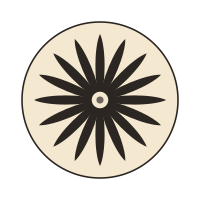
Mizuhiki knot / kaku-kami
Retains the form of a mizuhiki knot. Hair tufts (kaku-kami) hang at both temples.
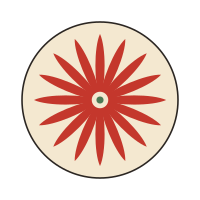
Tegara (topknot ornament)
Developed into a large, radial red topknot ornament with a purple dot at the center.


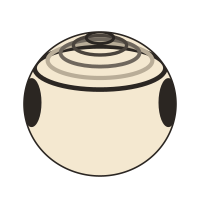
Janome + kase
Forelock becomes concentric circles (janome). 'Kase' ornaments at both temples.
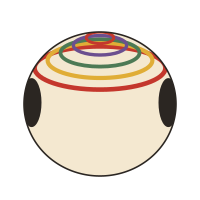
Beret ring
Concentric lathe lines in red, green, and purple on the crown. A derived form.
Black hair + janome + tegara
Tsuchiyu-type crown overlaid with tegara — lavish multicolor.
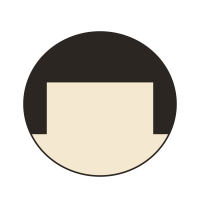
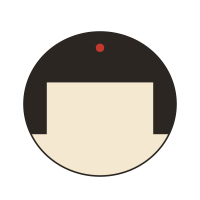
Okappa + red center part
A distinct regional expression, separate from the mizuhiki-te lineage.
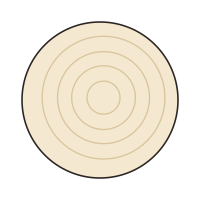
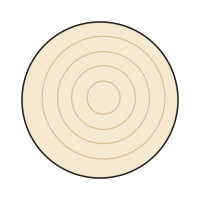
Unpainted
No painting. A white-wood pacifier doll with a wobbly head.
Observing structure, crown, face, and body in order narrows down the lineage.
①
Construction differences govern sound, weight, and tactile feel.
②
The three-way split from mizuhiki-te (Naruko = knot / Togatta = tegara / Tsuchiyu = janome) is the core of identification.
③
Primary sources are scarce, but useful as a supplementary identification aid.
④
Silhouette reflects the artisan's hand and the diameter of the lathe.
Body motifs fall broadly into floral / lathe / geometric-kasuri / pictorial / unpainted.
Chrysanthemum, plum, cherry, peony — the stars that adorn the kokeshi body.
Kiku-magaki (chrysanthemum fence)
Sakunami · Yamagata
一次Diagonal chrysanthemum plus fence (hedge). Prototype of scattered cherry.
Layered chrysanthemum
Yajiro · Togatta · Naruko
一次Petals stacked concentrically, radiating outward.
Scattered cherry (sakura-kuzushi)
Togatta
通説Cherry scattered diagonally (chrysanthemum read as cherry). Derived from Sakunami.
Sideways plum · dango plum
Kijiyama
一次Plum painted inside the bib.
Iris pattern
Togatta (body reverse) and others
一次Tall iris-like flower. Wards off evil spirits.
Peony
Zao · Kaminoyama
通説Large flower. Lavish coloring.
Nadeshiko · maple
Multiple lineages
未確認Nadeshiko (notched petals) and maple.
Multicolor horizontal bands using rotation — the process itself becomes the pattern.
Lathe color bands
Yajiro · Yamagata · Nanbu
通説Multicolor horizontal bands using rotation.
Wood-grain pattern
Kijiyama · Tsuchiyu (Jisuke line)
通説Concentric ellipses imitating tree rings.
Kimono motifs transferred to the body.
Well-frame · kasuri
Kijiyama (inside bib) · Yamagata
一次Well-frame (#) geometric pattern.
Bib (yodare-kake)
Kijiyama
一次Floral motifs inside a kimono-style bib.
Collar · Y-collar
Yajiro · Kijiyama
一次Kimono collar. Kijiyama uses a Y-shape.
Tsugaru's domain — regional painting transferred directly to the body.
Nebuta painting
Tsugaru
一次Bold line drawing in warrior-painting style.
Daruma
Tsugaru
一次Daruma painted on the body.
Ainu motifs (karakusa · warabite)
Tsugaru
一次Swirling karakusa = warabite (fern frond).
Not painting is itself a design choice.
Kinakina
Nanbu
一次Unpainted white wood. Head moves freely.
| Lineage | Crown tell | Body pattern tell | Structure · body form |
|---|---|---|---|
| Tsuchiyu | Janome + kase at both temples | Lathe lines primary | Slender straight body / inset (kii-kii) |
| Naruko | Mizuhiki knot ornament / kaku-kami | Layered chrysanthemum · wood grain | Shoulder ridge / inset (kyu) |
| Togatta | Large radial tegara | Layered chrysanthemum · scattered cherry + iris on body reverse | Thick straight body · large head |
| Yajiro | Beret-like lathe rings | Multicolor lathe bands · layered chrysanthemum | Straight body |
| Zao | Black hair + janome + tegara | Kiku-magaki-style chrysanthemum · peony (lavish multicolor) | Straight body / waisted |
| Yamagata | Modest forelock · split nose | Many small chrysanthemums + bib + lathe lines | White straight body to waisted |
| Sakunami | Rustic forelock (oldest layer) | Kiku-magaki | Slender straight body / old type has shoulder ridge |
| Hijiori | Tegara | Togatta-style + lathe lines | Naruko-like thick straight body (Naruko + Togatta) |
| Kijiyama | Okappa · Y-collar | Bib + sideways plum / dango plum · well-frame kasuri | Carved-in-one (single block) |
| Nanbu | Unpainted is the origin | No pattern / lathe lines | Head moves freely (Kinakina) |
| Tsugaru | Okappa + red center part · whale eyes | Nebuta · Daruma · Ainu motifs | Thick body · standing-child style |
| Nakanosawa | Tsuchiyu type (large head) | Large eyes · bold rustic coloring | Tsuchiyu sub-line (not independent) |
No face and the head wobbles freely?
→ Nanbu (Kinakina)
Nebuta, Daruma, or Ainu motifs on the body?
→ Tsugaru
Bib + Y-collar on the body (carved-in-one)?
→ Kijiyama
Head squeaks when turned (inset)? Mizuhiki knot + layered chrysanthemum or janome + kase + lathe lines
→ Naruko / Tsuchiyu
Large radial tegara? Tegara alone + layered chrysanthemum/scattered cherry or lavish multicolor or Naruko-like thick body + Togatta coloring
→ Togatta / Zao / Hijiori
Concentric lathe rings on the crown (beret ring)?
→ Yajiro
Kiku-magaki body · slender white straight body (no lathe lines)?
→ Sakunami (pure)
Waisted + many small chrysanthemums + bib + split nose?
→ Yamagata
naruko
The classic inset head that squeaks when turned.
Palette
Representative artisans
大沼又五郎、大沼岩太郎、桜井昭寛、岡崎斉吉
tougatta
A dignified head, radial forelock, and strict plum basin.
Palette
Representative artisans
佐藤周治郎、佐藤吉郎平、佐藤文吉、佐藤丑蔵
yajiro
Thick multiple lathe lines like a beret.
Palette
Representative artisans
小林倉吉、小林吉三郎、新山久治郎
sakunami
Slender crab body with radial red pattern on the crown.
Palette
Representative artisans
平賀謙蔵、岩松直助
zao
Lathe-line decoration with yellow as the lead color.
Palette
Representative artisans
岡崎善作、梅木修一
yamagata
Squat rustic body with soft cherry and wisteria coloring.
Palette
Representative artisans
小林清次郎、海谷七三郎
hijiori
An eclectic blend of Naruko and Togatta.
Palette
Representative artisans
佐藤重三郎、鈴木幸太郎
kijiyama
Mountain kokeshi with green and bib motifs.
Palette
Representative artisans
小椋久太郎、小椋泰一郎
nanbu
Unpainted Kinakina (plain wood) as the prototype.
Palette
Representative artisans
煤孫茂吉、松田清次郎
tsugaru
Lavish coloring with Daruma and Nebuta-style motifs.
Palette
Representative artisans
盛秀太郎、長谷川辰雄
tsuchiyu
Janome on the crown, crescent sleeping eyes.
Palette
Representative artisans
佐久間浅之助、阿部治助、西山徳二、佐藤佐志馬
nakanosawa
Wide-eyed 'tako-bozu' with a distinctive form.
Palette
Representative artisans
岩本善吉、岩本芳蔵
Tegara, mizuhiki-te, lineage names, and other terms used when reading kokeshi design.
※ Form vocabulary for each lineage is an overview; individual expression varies by artisan and era. For specific artist research, see the Encyclopedia and Genealogy pages.